01
A single damaged area
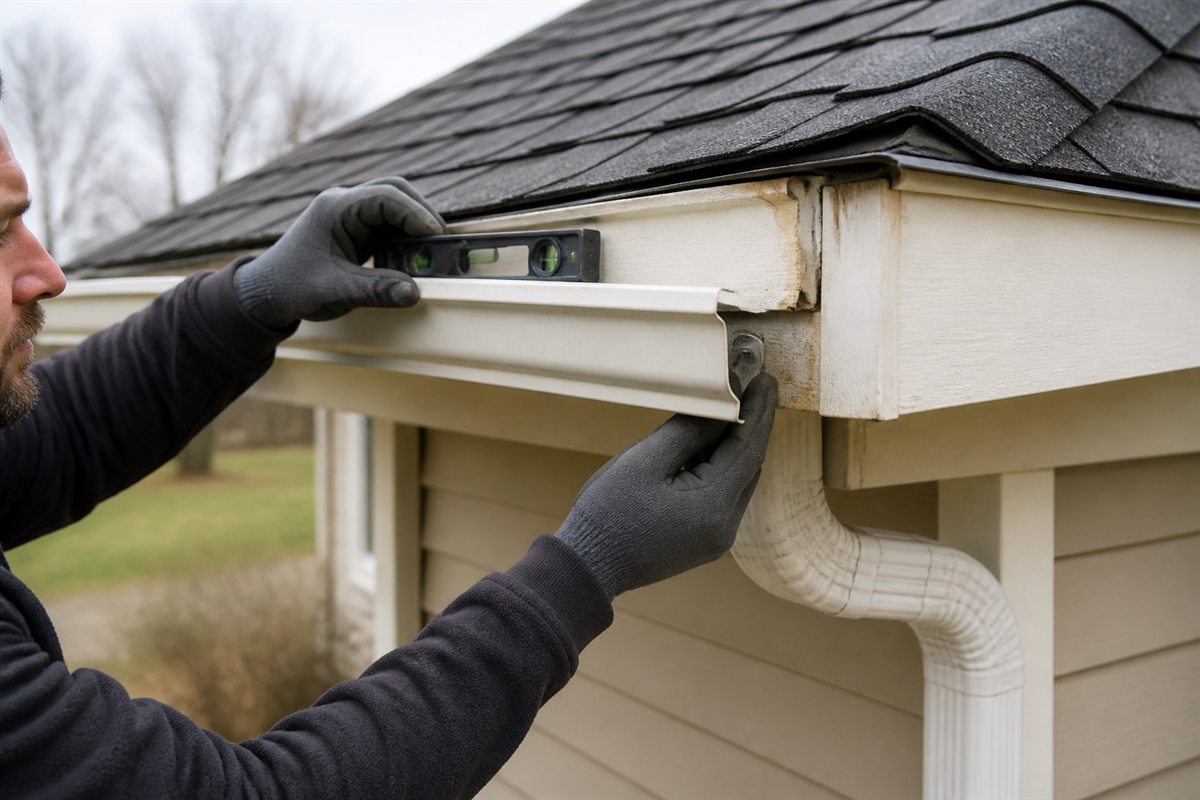
One loose hanger, leaking end cap or short impact-damaged section in an otherwise sound system may justify a targeted repair. Inspect nearby fascia and the remaining run before deciding.
02
Multiple leaks or separating seams
Widespread joint failure can indicate aging materials, movement or poor installation. Repeatedly sealing new leaks may cost less today but more over the remaining life of the system.
03
Sagging or pulling away
Loose fasteners can be localized, but rotten fascia, inadequate hanger spacing or deformation along long runs may require broader correction. Reattaching to a weak mounting surface is not a durable fix.
04
The system is the wrong size or layout
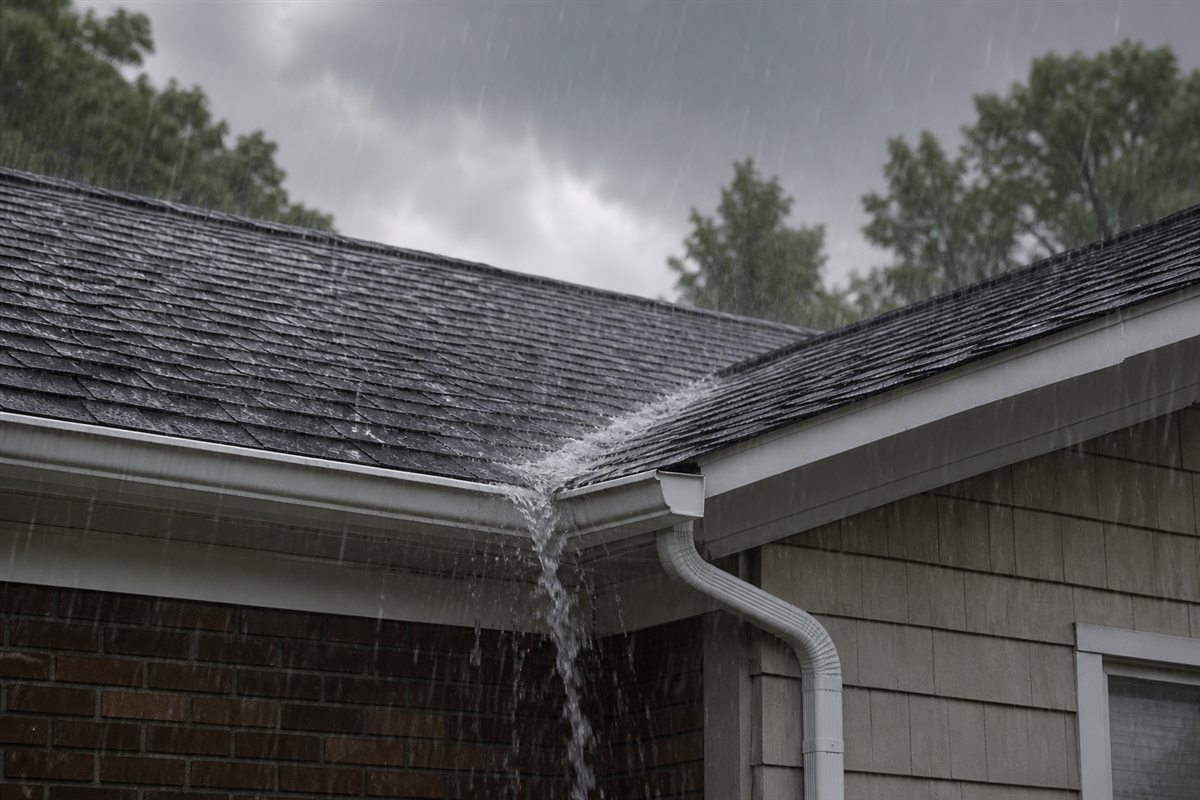
Repairing a leak does not correct chronic overflow caused by insufficient capacity, poor outlet placement or too few downspouts. When the design is wrong, compare the cost and disruption of redesign against continued spot repairs.
Quick comparison
Fast assessment
Property assessment
Compare cause, scope and remaining service life
A repair is strongest when one identifiable defect exists in an otherwise stable system. The decision changes when several runs show the same failure, the mounting surface is weak or the original design cannot drain the roof. Ask whether the proposed repair restores function or merely postpones a predictable next failure.
Age alone does not decide the question. Material condition, joint movement, corrosion, deformation, hanger attachment and performance during rain provide better evidence. A newer system installed with the wrong pitch can need redesign, while an older sound run may justify a targeted repair.
- One end cap or short section is damaged
- Multiple corners have begun leaking
- New fasteners will not hold in the fascia
- Several runs are distorted or corroded
- Overflow persists after cleaning and minor repairs
- The system needs repeated service at different locations
Planning the work
Price the repair and the alternative on the same horizon
Request a repair scope that identifies location, cause, expected result and warranty. Then ask what remains unchanged. If the rest of the system is near failure or the layout is undersized, the lower immediate price may not be the lower cost over the next several years.
For replacement, require an explanation of design changes rather than a generic new-system quote. Outlet placement, downspout count, size, fascia preparation and discharge should respond to the conditions found during diagnosis.
Details to confirm before hiring
- Is the defect isolated or repeated?
- What caused it?
- How much of the existing system remains sound?
- Does the repair include pitch and water testing?
- What problem would replacement correct differently?
- How do repair and replacement warranties compare?
Many defects can be patched temporarily. The useful decision is whether the repair addresses the cause and whether the surrounding system is likely to remain serviceable long enough to justify the work.
Common questions
Frequently asked questions
How many gutter leaks are too many to repair?
There is no universal number. Consider whether leaks are isolated or recurring across several runs, why they developed and the condition of the surrounding material and mounting surface.
Can one gutter section be replaced?
Often, if a compatible profile and size are available and adjacent components remain sound. The transition creates another connection, so expected remaining life should justify partial work.
Does sagging always require replacement?
No. A localized sag may be rehung when the gutter and fascia are sound. Widespread deformation, weak fascia or repeated movement can justify broader replacement.
Editorially reviewed: August 29, 2026
Next step
Ready to discuss your gutter project?
Check whether a participating service provider is available for your ZIP code and project type.
Call for gutter help →