
01
What changes between 5-inch and 6-inch
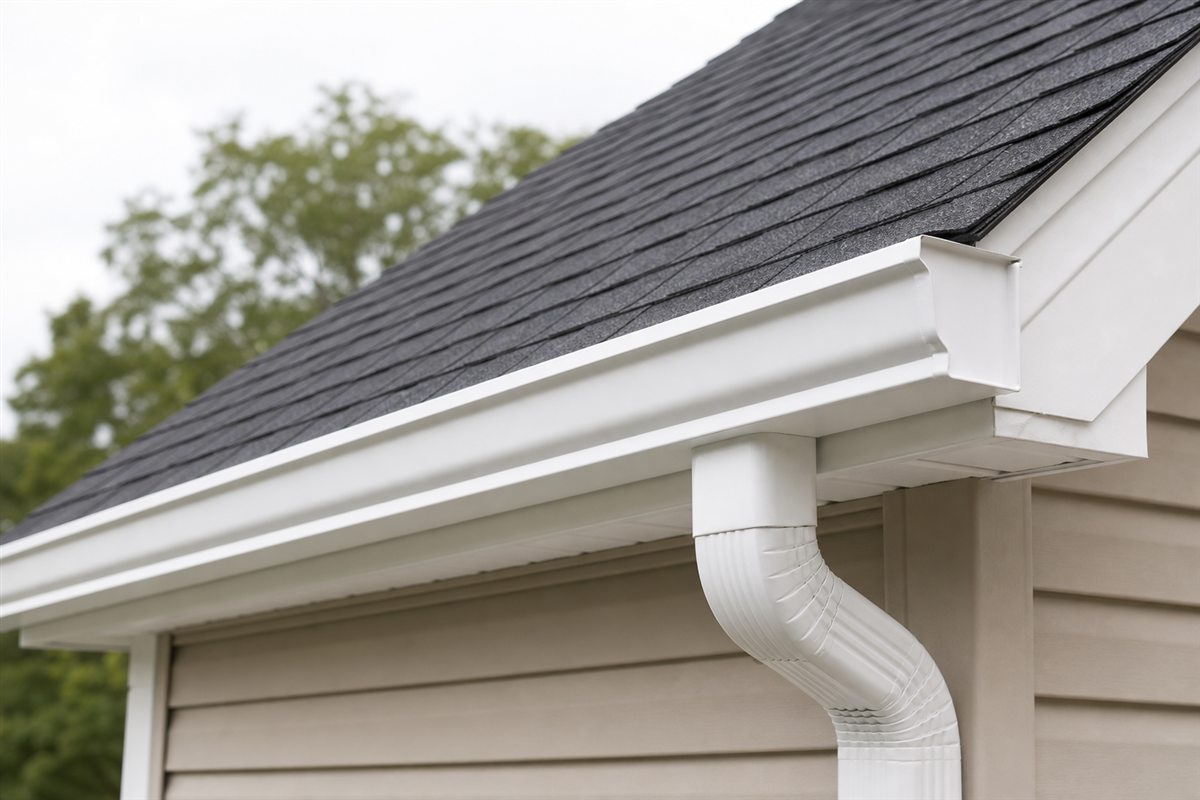
A nominally larger K-style gutter provides more cross-sectional capacity and is commonly paired with larger outlets and downspouts. It also changes visual scale, material cost and installation details.
02
When 6-inch deserves discussion
Large or steep roof areas, long runs, concentrated valley discharge and a history of overflow during intense rain are reasons to discuss a higher-capacity layout. The final decision should include outlets and downspouts.
03
When 5-inch may be appropriate
Smaller roof areas with short, well-drained runs can perform well with properly pitched 5-inch gutters and adequate downspouts. Moving up in size is not a substitute for clearing blockages or correcting poor discharge.
04
Questions to ask an installer
Ask what roof areas feed each run, where the highest-flow points occur, how many outlets are proposed and which downspout size will be used. A clear explanation is more useful than “we always install six-inch.”
05
Do not forget outlets and downspouts
A 6-inch gutter paired with restrictive outlets or too few downspouts can still overflow. Treat gutter size, outlet opening, downspout dimensions, elbows and discharge route as one connected capacity decision.
If overflow is isolated at a roof valley, a localized change may be more appropriate than upsizing every run. Ask the installer to identify which roof surfaces feed each problem area.
Quick comparison
A practical decision frame
Property assessment
Size the busiest run rather than the house label
The deciding question is how much roof flow reaches each run and how quickly the outlets can remove it. A large house may have several short, simple roof areas that drain well with 5-inch components. A smaller house can have a steep valley that sends concentrated runoff into one short section and justifies a higher-capacity detail.
Observe where overflow begins. Uniform spill along a clean run suggests a different constraint than overshoot at one valley or backup above a downspout. The proposed change should match that evidence and include outlet and downspout dimensions, not only a larger trough.
- Large or steep roof areas feed one elevation
- Inside valleys concentrate flow at a short section
- Long runs place outlets far from peak flow
- Clean gutters overflow during intense rain
- A larger profile fits the fascia and roof edge
- Suitable locations exist for larger or additional downspouts
Planning the work
Compare complete 5-inch and 6-inch systems
Ask the installer to quote each alternative with its intended outlets and downspouts. A 6-inch gutter feeding the same small outlet may deliver less improvement than expected. On mixed roofs, only the high-flow elevations may need larger components, provided transitions and appearance are handled well.
Consider visual scale and maintenance alongside capacity. Larger components project farther from the fascia and may affect trim relationships. They do not remove the need to clear debris or maintain extensions. The goal is reliable flow with an appropriate layout, not the largest available product.
Details to confirm before hiring
- What roof area feeds the problem run?
- Is overflow uniform or concentrated at a valley?
- Which outlet and downspout sizes accompany each option?
- Could an additional outlet solve the bottleneck?
- Will larger components affect the roof edge?
- Why is the same size proposed for every elevation?
Upsizing cannot correct a blocked downspout, negative pitch, weak fascia or discharge line that backs up. Diagnose those restrictions before paying for more gutter capacity.
Common questions
Frequently asked questions
Are 6-inch gutters always better?
No. They add capacity but also cost and visual scale. A well-designed 5-inch system can work on simpler roof areas, while some roofs benefit from larger components.
Do 6-inch gutters need larger downspouts?
They are commonly paired with larger outlets and downspouts so added trough capacity is not lost at the drain path. Confirm the complete specification.
Can gutter size fix valley overflow?
Sometimes extra capacity helps, but outlet location, splash behavior, pitch and the concentrated roof area feeding the valley should also be assessed.
Editorially reviewed: August 29, 2026
Next step
Ready to discuss your gutter project?
Check whether a participating service provider is available for your ZIP code and project type.
Call for gutter help →