01
Start at the roof edge
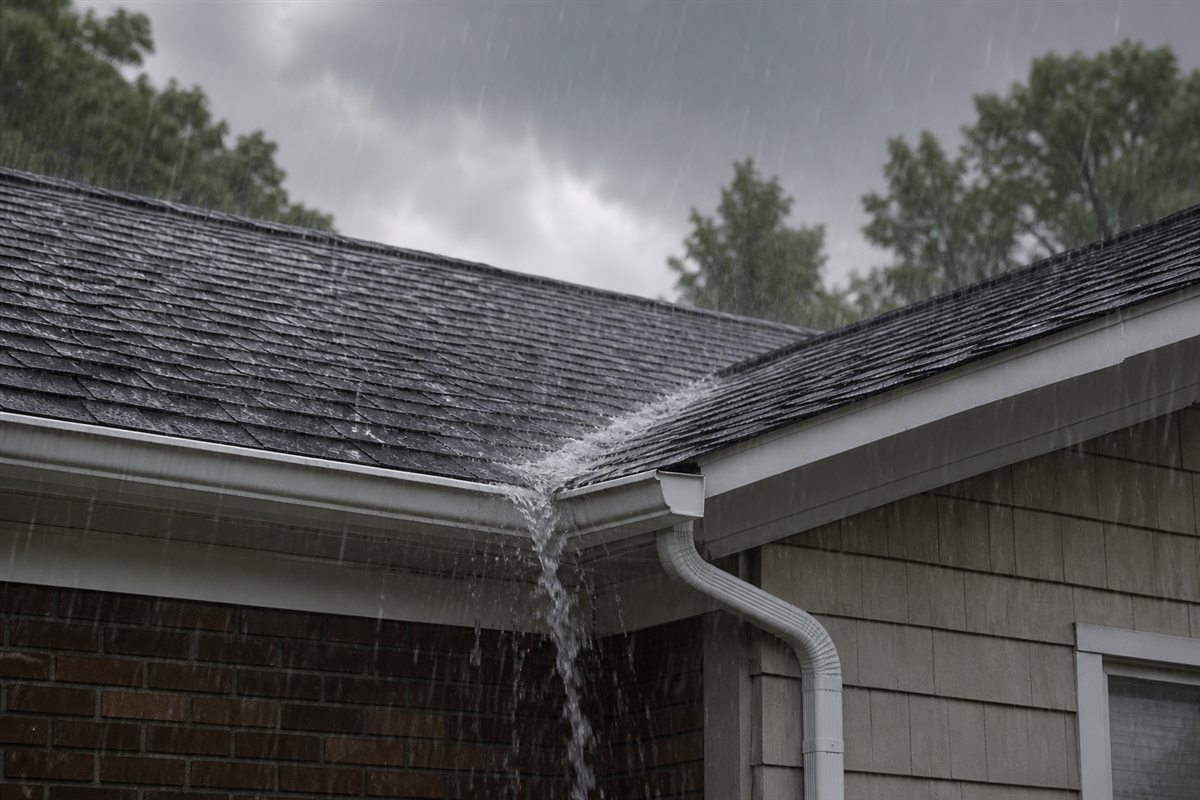
During safe conditions, observe whether the gutter captures runoff and whether water spills at valleys, joints or low spots. A clean, properly sized run should carry flow to the outlet rather than release it beside the wall.
02
Check downspouts and extensions
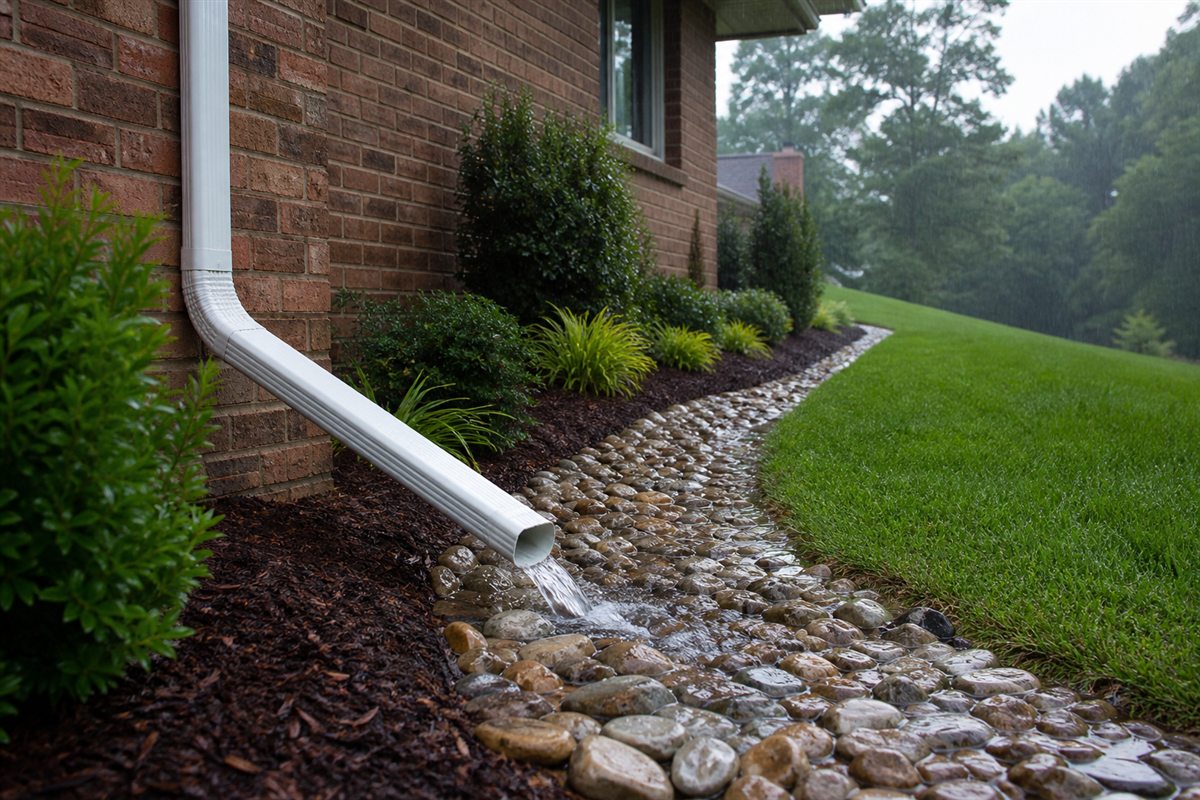
Look for disconnected joints, crushed elbows, leaking seams and extensions that end in a depression. Splash blocks must point the right way and rest on grade that continues away.
03
Buried drainage can hide restrictions
If a downspout connects underground, weak discharge or backup at the adapter can suggest blockage or failure downstream. The gutter contractor may need to coordinate with a drainage specialist.
04
Grading and foundation factors
Even a working downspout cannot overcome a low area that sends surface water back toward the house. Soil settlement, hardscape and neighboring runoff may contribute beyond the gutter scope.
05
When to escalate
Persistent seepage, structural movement, mold, electrical exposure or interior water damage deserves timely evaluation by the appropriate qualified professional. Do not rely on a gutter change as a guaranteed foundation repair.
Property assessment
Follow runoff from roof collection to surface drainage
Start with the gutter during rain, then follow the downspout and extension to the ground. A working gutter can still concentrate water in a low area. Conversely, good grading cannot compensate for overflow that releases roof runoff directly beside the wall.
Map other contributors such as roof valleys, patios, driveways, neighboring grade, soil settlement and irrigation. Foundation-side water is a site-drainage symptom; gutters may be part of the solution without being the only cause.
- Downspout ends within a low area
- Splash block points toward the house
- Extension is crushed, disconnected or uphill
- Buried line backs up at its adapter
- Soil slopes back toward the foundation
- Pool remains long after roof discharge stops
Planning the work
Choose a discharge point that continues moving water away
An extension should reach stable positive drainage or an appropriate designed connection. Moving the outlet a few feet onto another depression is not a durable solution. Consider erosion, pedestrians, freezing surfaces and property boundaries when choosing the route.
If interior seepage, structural movement or extensive drainage failure is present, coordinate with the appropriate foundation, grading or drainage professional. A gutter provider should state where its scope ends rather than promising a complete foundation remedy.
Details to confirm before hiring
- Is the gutter capturing all roof runoff?
- Where does the downspout actually terminate?
- Does grade continue away from that point?
- Is a buried line present and tested?
- Could hardscape or neighboring runoff contribute?
- Which trade owns work beyond the gutter system?
Length helps only when it reaches a suitable destination and remains open. Poor grade, a blocked line or discharge across a hazard requires a more complete drainage plan.
Common questions
Frequently asked questions
Will longer downspout extensions stop pooling?
They can help when discharge is too close, provided the extension reaches a suitable area and grade continues away from the house.
Can clean gutters still cause foundation pooling?
Yes, if outlets, downspouts, extensions or grading place captured water beside the foundation.
Who fixes underground downspout drains?
Scope varies. A gutter provider may handle above-ground components, while buried drainage may require a drainage, plumbing or excavation specialist.
Editorially reviewed: August 29, 2026
Next step
Ready to discuss your gutter project?
Check whether a participating service provider is available for your ZIP code and project type.
Call for gutter help →