01
Common gutter repair problems
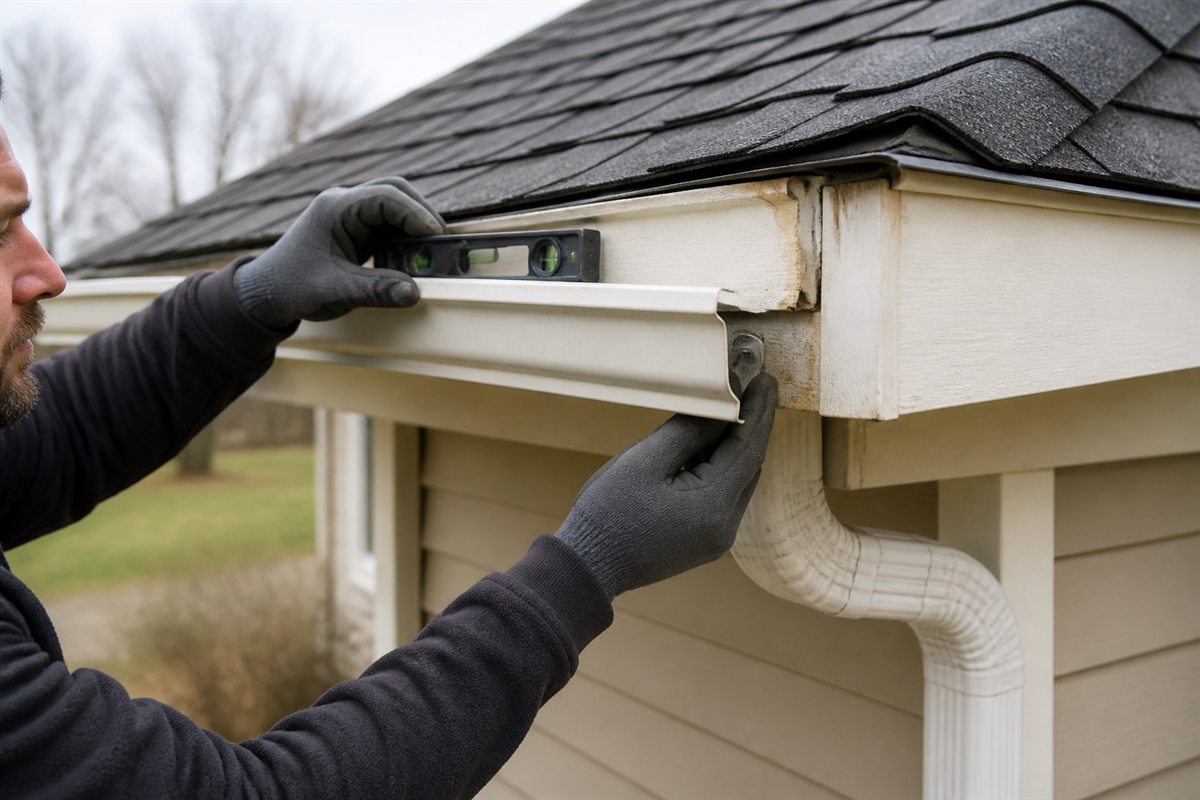
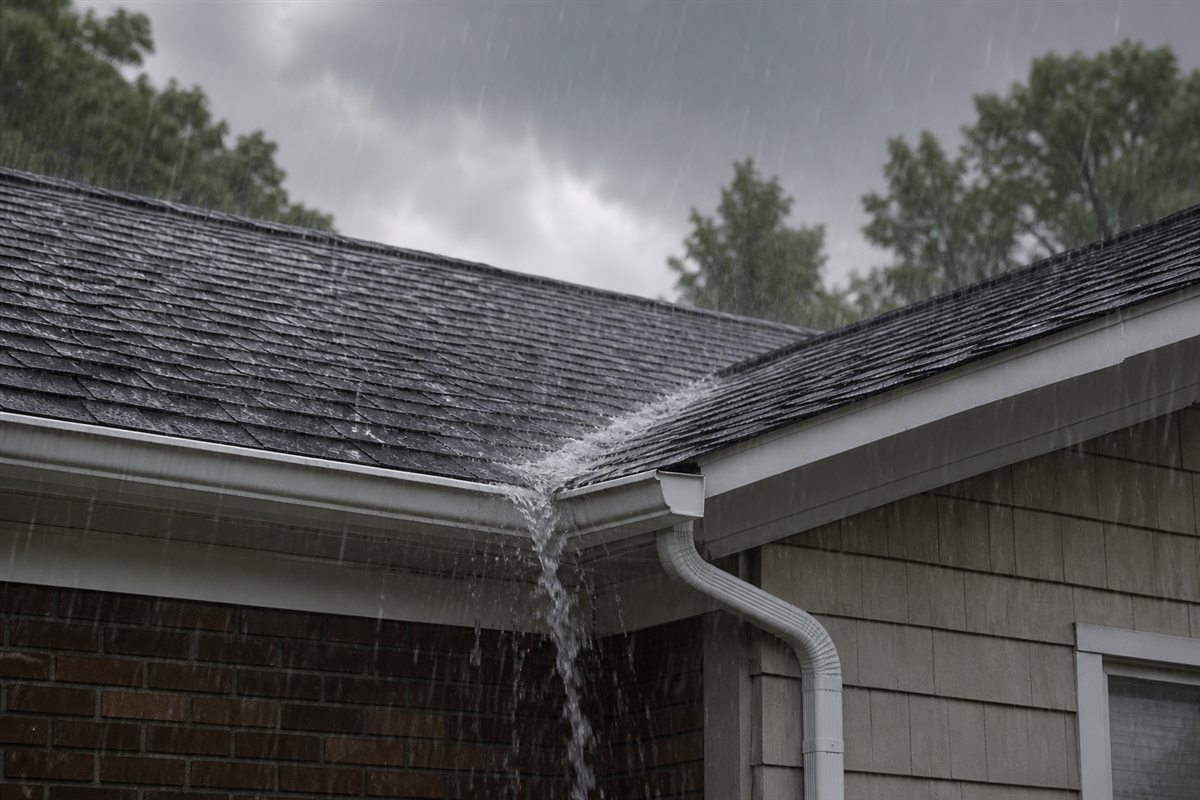
Localized leaks may occur at end caps, corners, outlets or older sectional seams. Loose hangers can create low spots, while impact damage can deform a short section and interrupt flow.
Staining behind the gutter, water at the foundation or overflow in the middle of a run needs broader diagnosis. The source may not be where the damage appears.
- Leaking corner or end cap
- Loose hanger or short sagging area
- Separated downspout joint
- Damaged elbow or extension
- Small impact-damaged section
- Localized outlet blockage
02
What should be inspected first
The inspection should cover the roof edge, gutter run, hangers, fascia, outlets, downspouts and discharge point. Standing water after dry weather can reveal a low spot; movement at fasteners can suggest a weak mounting surface.
03
Repair versus replacement
Repair is strongest when the defect is isolated and the rest of the system is sound. Replacement deserves discussion when corrosion, deformation, failed joints or pulling away affect multiple runs—or when the original size and layout cannot handle roof flow.
04
What to request in a repair quote
Ask for the identified cause, exact locations, materials, access assumptions and whether water testing is included. The scope should distinguish resealing, re-pitching, rehanging, section replacement and fascia work.
05
Safety and temporary observations
Photograph the problem from the ground during or just after rain when safe. Avoid ladder work in wet, windy or storm conditions. If water is entering the structure or electrical areas, prioritize appropriate emergency help.
Property assessment
Separate the visible symptom from the failure mechanism
A leak at a corner may be a failed seal, movement, poor fit or water backing up from a restricted outlet. Sagging may come from loose hangers, but the reason those hangers moved could be rotten fascia or prolonged standing water. Diagnosis should continue until the provider can explain why the defect developed.
Document whether the problem is isolated, when it occurs and what happens nearby. Photographs from the ground during safe conditions can show overflow location, downspout output and water behind the gutter. Recent roof, siding or guard work may also have changed the drainage path.
- One connection leaks while the surrounding run is sound
- Water remains in a low spot after rain
- Fasteners move when the gutter is lightly assessed
- Fascia staining extends beyond the visible leak
- Several prior sealant repairs have failed
- Overflow appears only when a buried drain is connected
Planning the work
Define what the repair will change and how it will be tested
The proposal should identify exact locations and distinguish cleaning, resealing, re-pitching, rehanging, outlet enlargement, downspout work and section replacement. Ask which suspected causes have been ruled out and whether the repair includes a controlled water test.
If the provider recommends replacement, request a repair alternative where practical and an explanation of its limitations. If repair is chosen, ask what signs would indicate that the remaining system has reached the end of useful service.
Details to confirm before hiring
- What is the diagnosed cause, not just the symptom?
- Which exact sections and connections are included?
- Is fascia or roof-edge work required?
- Will pitch and downspouts be checked?
- How will the result be water-tested?
- What condition is excluded from the repair warranty?
Sealant can restore a stable prepared joint, but it cannot stop movement, correct a poor fit or relieve backed-up water. Repeated failure is evidence to investigate the assembly.
Common questions
Frequently asked questions
Can a leaking gutter be resealed?
Sometimes, when the connection is clean, stable and otherwise sound. Repeated sealant failure may indicate movement, poor fit or broader deterioration.
Can sagging gutters be rehung?
A localized sag may be corrected if the gutter and fascia are sound. Widespread sagging or rotten fascia requires a broader repair plan.
Will gutter repair stop basement or foundation water?
It may help when roof runoff is the source, but grading, drainage and foundation conditions can also contribute and may require separate evaluation.
Editorially reviewed: August 29, 2026
Next step
Ready to discuss your gutter project?
Check whether a participating service provider is available for your ZIP code and project type.
Call for gutter help →