01
Roof-edge and drip-edge paths
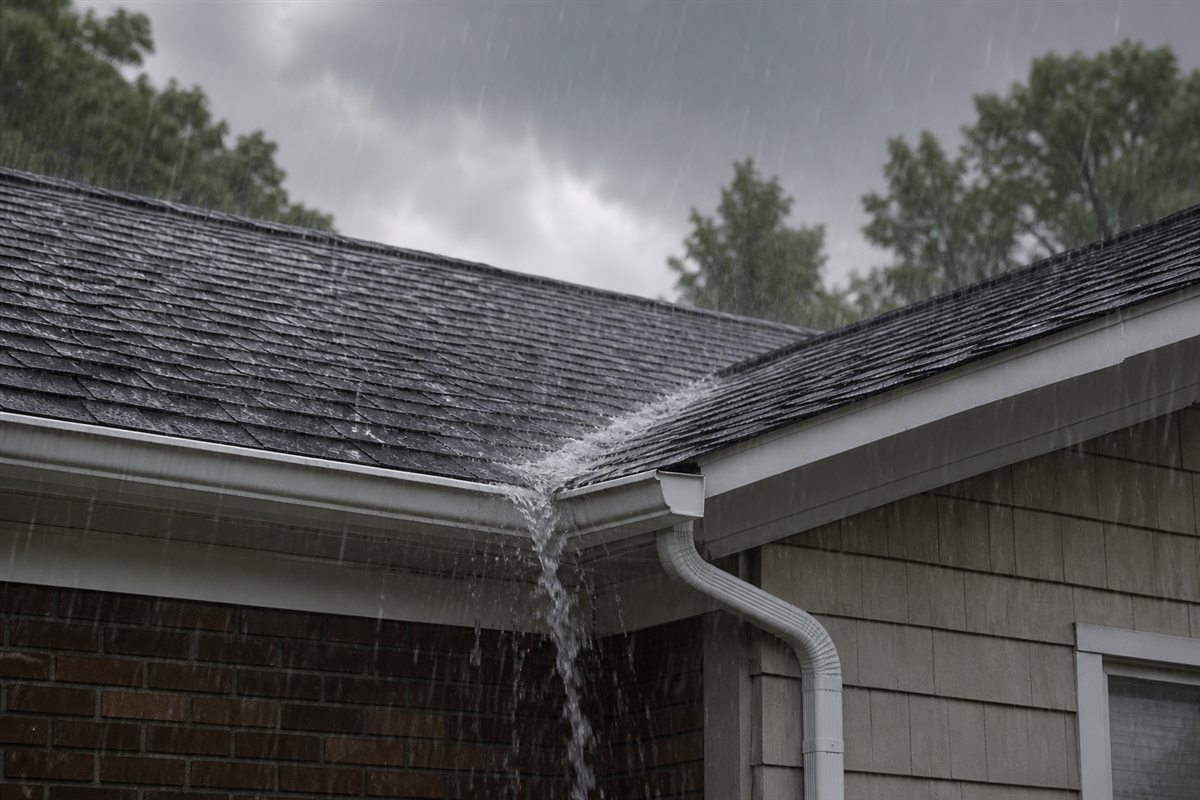
Roof runoff should enter the gutter rather than follow the fascia. Gaps, unusual edge details or displaced components can let water pass behind the trough. The exact remedy depends on the existing roof assembly.
02
Overflow that appears to be a leak
A clogged or low gutter can spill over the back, especially when the front edge sits higher. Observe whether the leak occurs only in heavy rain and whether the downspout is flowing.
03
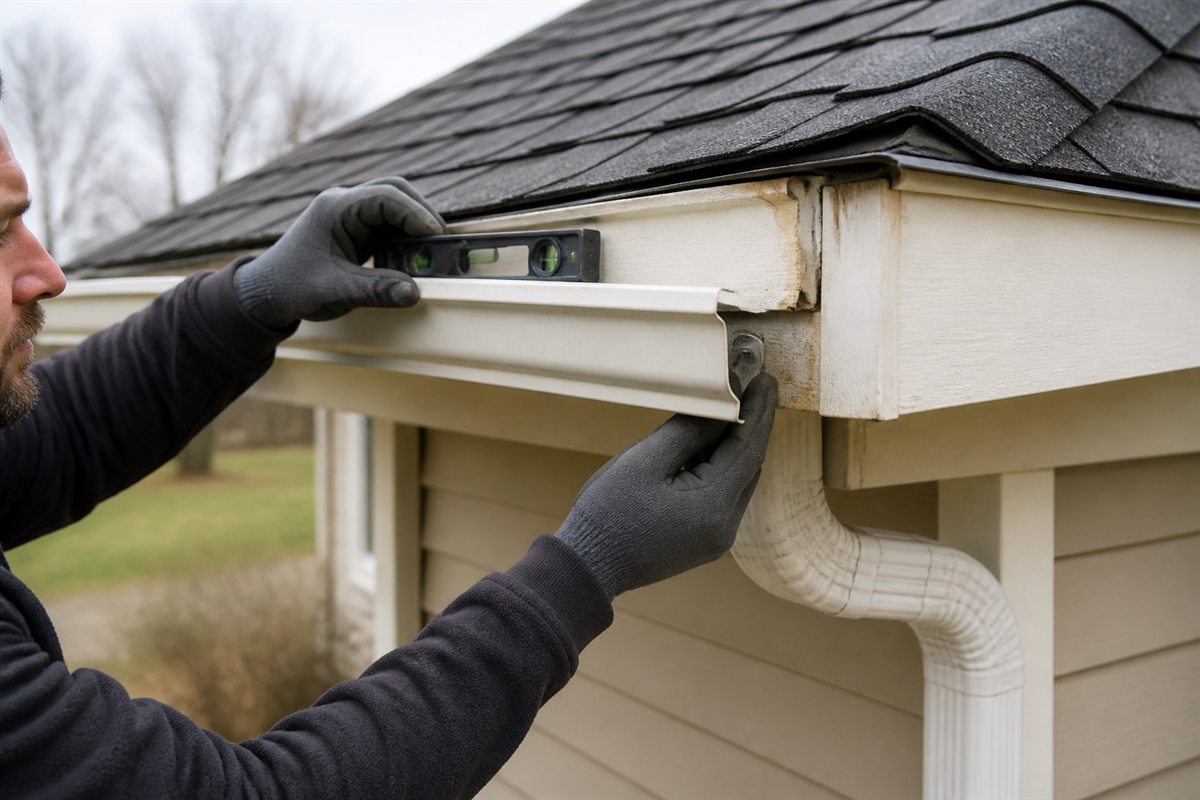
Loose gutter and damaged fascia
Separation opens a path for water and can worsen the mounting surface. Soft wood, peeling paint or staining may indicate prolonged wetting and should be evaluated before rehanging.
04
Why surface caulk may fail
Sealant cannot correct an incorrect drainage path or a moving connection. The assembly must be clean, stable and detailed so water is directed into the gutter.
05
What to document for a provider
Photograph the location, note rain intensity and identify whether water comes from behind, over the front or through a joint. Mention recent roof or gutter work because edge details may have changed.
Property assessment
Trace the water at the roof edge before choosing sealant
Water can pass behind a gutter because runoff misses the back edge, the gutter has separated from fascia, a roof-edge or flashing detail is displaced, or the trough overflows over the back. These paths can look identical from the ground but require different corrections.
Observe timing and location. Leakage that begins immediately in light rain differs from backup after the gutter fills. Note whether the downspout is flowing and whether the water appears along a long edge, near a valley or beside one end cap.
- Water appears between gutter and fascia
- The gutter has a visible gap from the roof edge
- Overflow occurs before water appears behind the run
- Fascia staining extends along a long section
- Leakage began after roofing or gutter work
- A joint leak is being mistaken for back-edge flow
Planning the work
Coordinate gutter, fascia and roof-edge responsibility
Ask the provider to identify the entry path and which trade owns the repair. Gutter repositioning or rehanging may solve an attachment gap, while roofing or flashing work may require a roofer. Damaged fascia should be assessed before the gutter is fastened again.
The finished detail should be tested with controlled water directed along the roof surface, not only poured into the trough. That verifies that runoff enters the gutter before outlet flow is tested.
Details to confirm before hiring
- Does water enter from above, behind or through a joint?
- Is the gutter full when leakage begins?
- Are roof-edge components displaced or missing?
- Is fascia repair required first?
- Which provider warrants the final interface?
- How will roof runoff be tested after repair?
Sealant is appropriate for specific stable joints. It should not be used to bridge an incorrect roof-water path, cover rotten fascia or hold a loose gutter against the house.
Common questions
Frequently asked questions
Why does water run between my gutter and fascia?
Possible causes include a roof-edge gap, loose gutter, overflow, failed flashing detail or water tracking around a connection.
Will caulking behind the gutter fix it?
Only in limited connection details. Caulk will not fix an incorrect roof-water path, sagging gutter or overflow restriction.
Can leaking behind gutters rot fascia?
Repeated wetting can damage wood and finishes. The source should be corrected and the mounting surface assessed.
Editorially reviewed: August 29, 2026
Next step
Ready to discuss your gutter project?
Check whether a participating service provider is available for your ZIP code and project type.
Call for gutter help →