
01
Debris and blocked outlets
Leaves, roofing granules and compacted organic material can restrict flow along the gutter or directly over an outlet. A blocked underground connection can also back water up through an otherwise clear downspout.
02
Gutter capacity and roof valleys
A valley collects water from two roof planes and can deliver it to one short section of gutter. Water that overshoots only at that point may require a layout or capacity discussion rather than a whole-house change.
03
Pitch, sagging and low spots
Water should move toward outlets without pooling. Loose hangers, damaged fascia or an improperly set slope can create low points that reduce usable capacity and spill before the outlet can work.
04
Downspout and discharge restrictions
Small outlets, too few downspouts, tight elbows or blocked discharge routes can keep a clean gutter from draining fast enough. Inspect the full path before adding guards.
Note whether overflow happens along the middle of a run, at a valley, at an end cap or directly above a downspout. That location narrows the likely cause.
05
A safe observation checklist
Observe the system from the ground during rain if conditions are safe. Note the exact spill location, whether water is moving through the downspout and where it exits. Do not climb a ladder during a storm.
After the weather clears, look for visible debris, pulled hangers, standing water, stained fascia and crushed extensions. These observations help a provider distinguish cleaning, repair and redesign.
- Middle of run: possible low spot or capacity issue
- At a valley: concentrated roof flow
- Directly above outlet: blockage or restricted downspout
- Behind gutter: roof-edge or attachment detail
- At ground: poor extension, grading or underground blockage
Property assessment
Use the spill location to narrow the cause
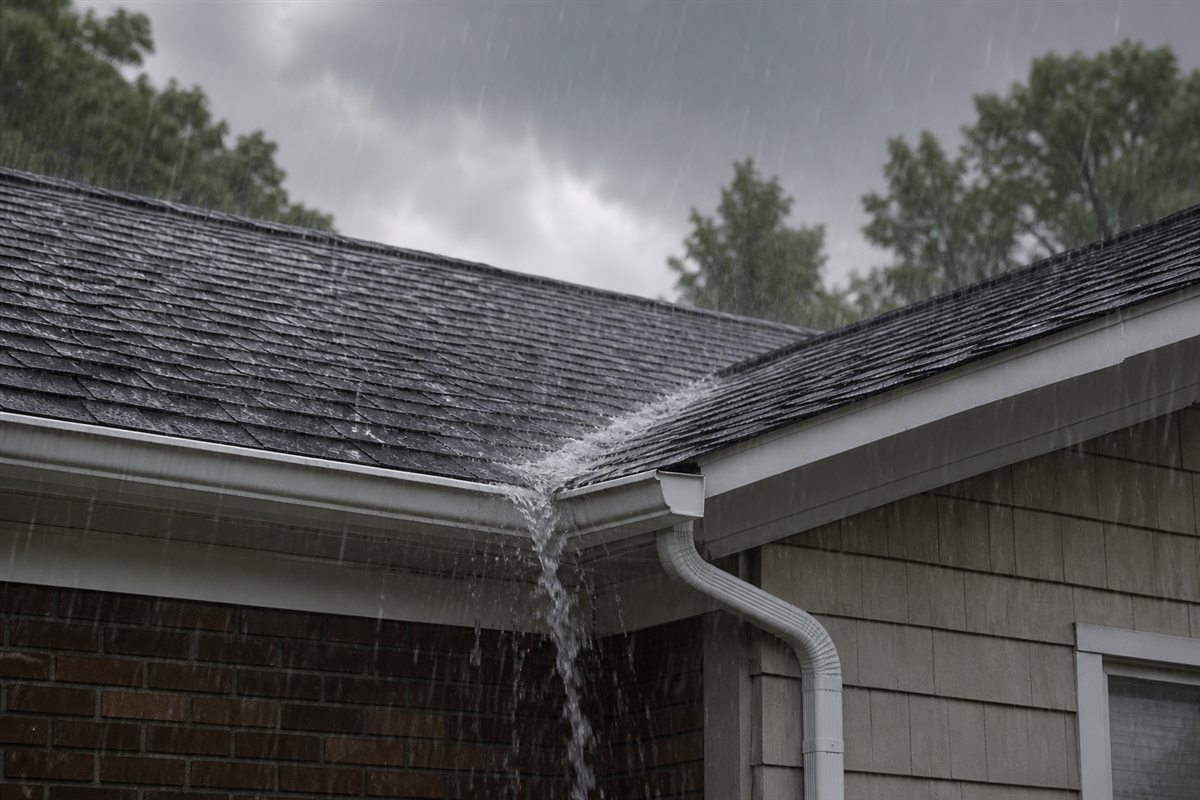
When conditions are safe, watch from the ground and note where overflow starts. Spill in the middle of a run can indicate a low spot or insufficient capacity. Overshoot at an inside corner points toward concentrated valley flow. Backup directly over an outlet suggests debris or a restriction farther down the drain path.
Also compare light and heavy rain. A system that fails in every shower may have a blockage or severe pitch problem; one that fails only during short intense storms may be reaching a capacity limit. These observations are more useful than a general statement that the gutters overflow.
- Water spills at one valley but nowhere else
- A clean run holds standing water after the storm
- Downspout output is weak while the gutter is full
- Water appears behind the gutter rather than over the front
- An underground adapter bubbles or backs up
- Overflow began after roof, guard or gutter work
Planning the work
Test restrictions from the gutter to the final outlet
A provider should inspect debris, pitch, hangers, outlet openings, elbows, downspouts, extensions and any underground connection. Testing should proceed downstream so a clear upper section is not mistaken for a clear system. If guards are present, their surface behavior at valleys should be included.
The remedy should name the diagnosed constraint: cleaning, re-pitching, adding an outlet, enlarging components, correcting a roof-edge detail or repairing discharge. If several possibilities remain, ask which low-cost test will distinguish them before approving replacement.
Details to confirm before hiring
- At what exact location does overflow begin?
- Does it happen with clean gutters?
- Is standing water present after the storm?
- Does the downspout discharge strongly?
- Is a buried drain connected?
- What observation supports the proposed repair?
Cleaning is appropriate when debris restricts flow. Repeated cleaning will not fix inadequate pitch, a small outlet, valley overshoot or a downstream line that backs up.
Common questions
Frequently asked questions
Why do clean gutters still overflow?
The run may be undersized, improperly pitched or under-drained, or a valley may concentrate more water than the nearby outlet can accept.
Can a blocked underground drain cause gutter overflow?
Yes. A restricted buried connection can back water into the downspout and gutter. Disconnecting or testing the downstream path may help isolate the issue.
Should I add gutter guards to stop overflow?
Only if debris is the actual restriction. Guards will not fix poor slope, insufficient capacity, undersized outlets or a blocked discharge route.
Editorially reviewed: August 29, 2026
Next step
Ready to discuss your gutter project?
Check whether a participating service provider is available for your ZIP code and project type.
Call for gutter help →